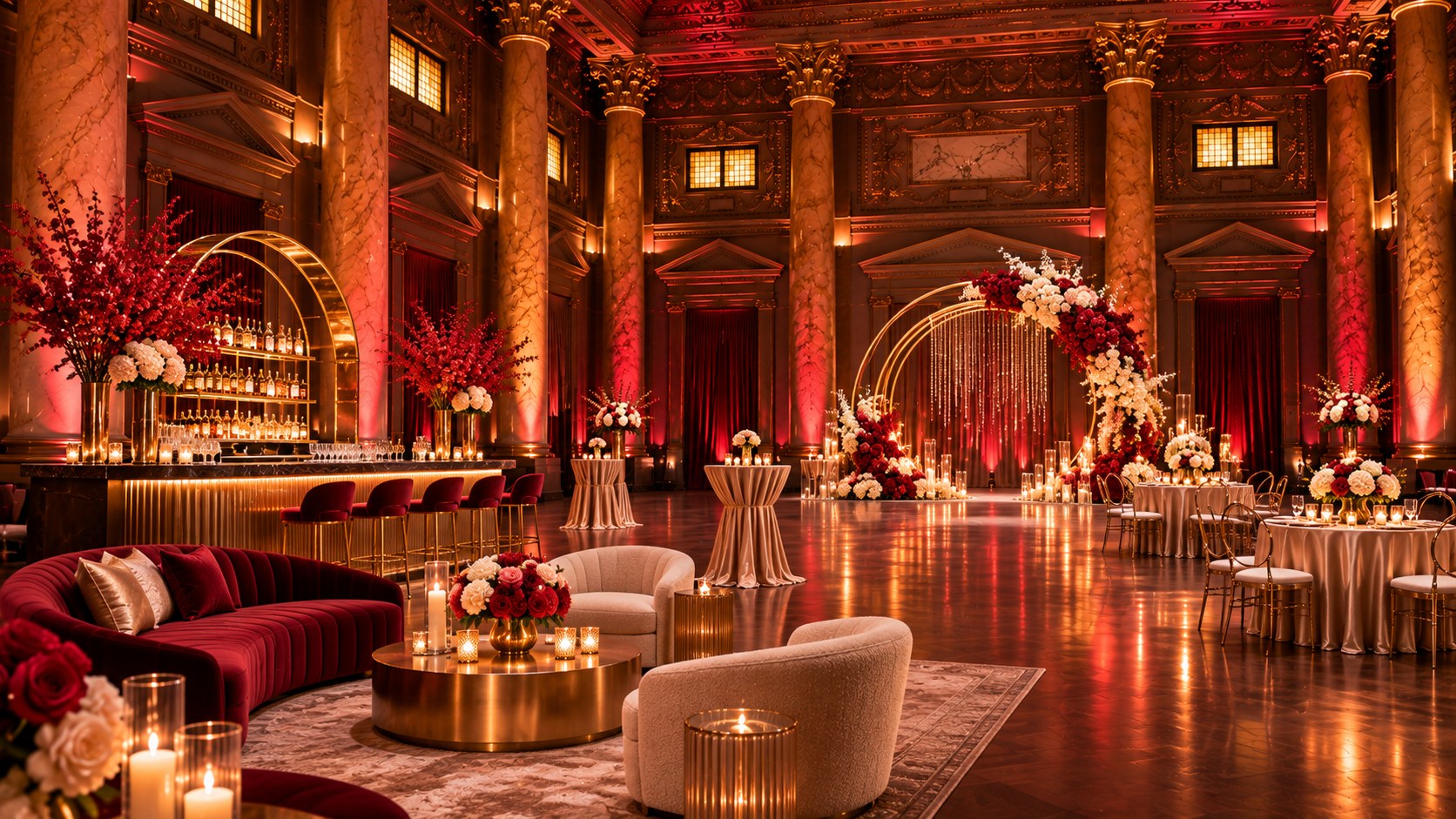
Questions to Ask Manhattan Wedding Venues
Essential questions when touring Manhattan wedding venues
Asking the right questions when touring Manhattan wedding venues ensures you understand capacity, costs, policies, and logistics before signing a contract for your NYC wedding. This guide is written specifically for couples planning a wedding in New York City, with Manhattan neighborhood context, transit and parking realities, accessibility and seasonality considerations, vendor coordination, and budgeting guidance woven throughout. Use it as a working reference as you move from early research through your wedding day, and pair it with our neighborhood guides, logistics pages, and interactive planning tools to cover every angle of your Manhattan wedding.
Capacity and Layout Questions
Understanding capacity is essential. Ask about both seated and cocktail capacity, as these differ significantly and affect your guest count and floor plan.
- What is the seated dinner capacity?
- What is the cocktail reception capacity?
- How many guests can fit on the dance floor?
- Is there a separate ceremony space?
- What is the maximum guest count for the venue?
Catering and Bar Questions
Catering policies vary widely between Manhattan venues. Understand whether catering is in-house, what minimums apply, and what bar options are available.
- Is catering in-house or can I bring outside caterers?
- What is the food and beverage minimum?
- What bar packages are available?
- Can I bring my own wine or alcohol?
- Are there corkage fees?
Vendor and Policy Questions
Vendor policies affect your flexibility and costs. Understand restrictions, buyout fees, and what equipment is included.
- Are there preferred vendor lists or restrictions?
- What are the vendor buyout fees?
- What equipment is included (tables, chairs, linens, AV)?
- Can I bring my own decorations?
- What are the setup and teardown times?
Logistics and Accessibility Questions
Logistics questions cover parking, transit, accessibility, and practical day-of considerations for your Manhattan wedding.
- Is valet parking available? What is the cost?
- What parking garages are nearby?
- Is the venue ADA accessible?
- Is there a bridal suite or getting-ready room?
- Is there a coat check?
Contract and Payment Questions
Contract terms define your financial commitment. Understand payment schedules, cancellation policies, and what happens if plans change.
- What is the payment schedule?
- What is the cancellation policy?
- What is the minimum spend and what does it include?
- Are there additional fees (service charge, tax)?
- What happens if my guest count changes?
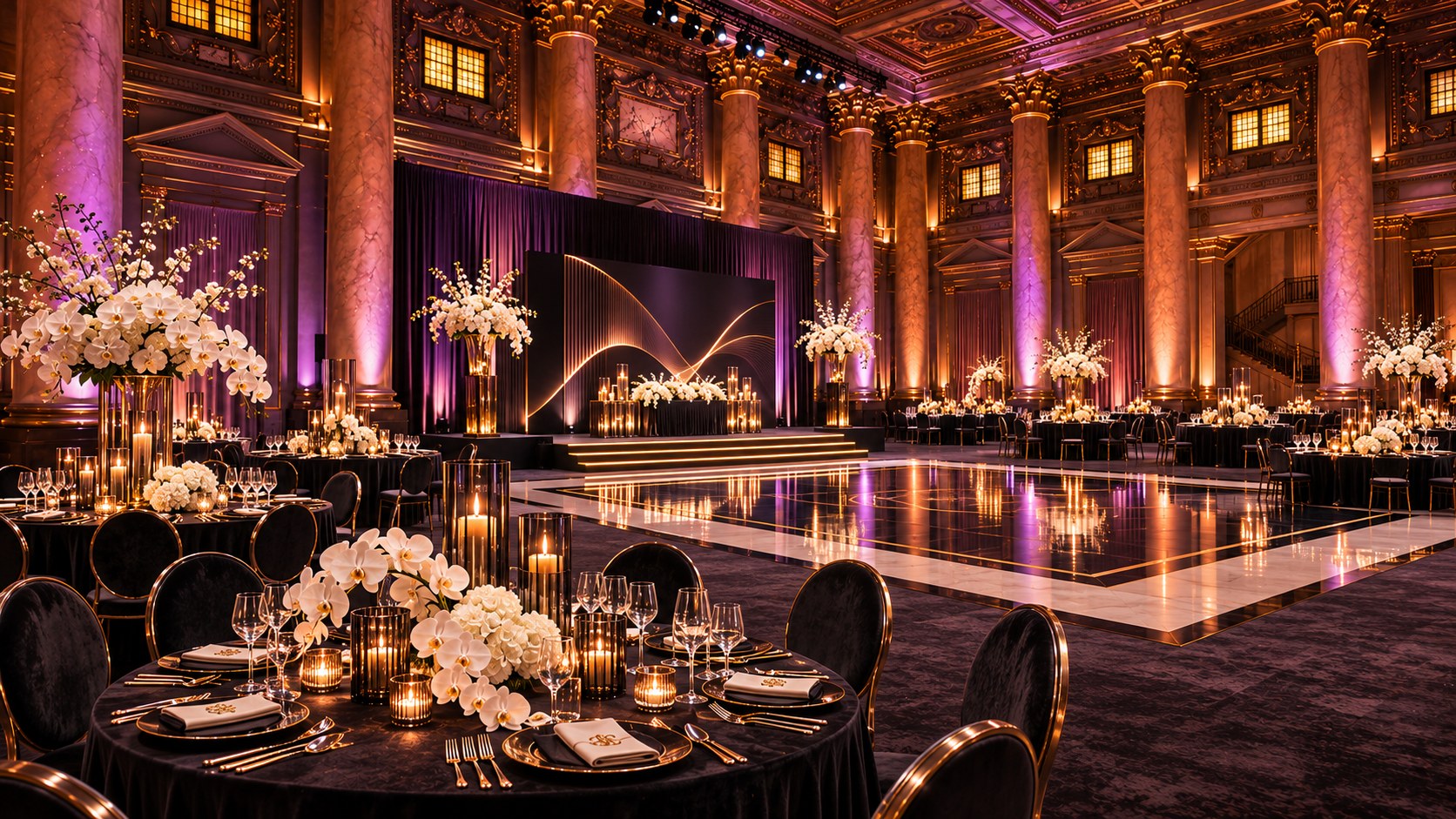
Manhattan-Specific Considerations for Questions to Ask Manhattan Wedding Venues
Planning questions to ask Manhattan wedding venues in Manhattan is different from planning it anywhere else. The density of venues, vendors, and transit options is an advantage, but it also means competition for peak dates is fierce and logistics are more complex. This section covers the Manhattan-specific factors that shape how you should approach questions to ask manhattan wedding venues — from neighborhood selection to the realities of executing an event in a dense urban environment where loading docks, parking, and guest travel all require deliberate planning.
Choosing the right Manhattan neighborhood
Your neighborhood choice shapes venue style, guest logistics, and budget more than almost any other decision. Midtown favors luxury ballrooms and large-scale weddings; Downtown favors industrial lofts and rooftop terraces; Tribeca and SoHo favor artistic, intimate spaces; and the Upper East and West Sides favor classic elegance and Central Park proximity. Match your wedding style to a neighborhood that reinforces it rather than fighting against it.
- Midtown: luxury ballrooms, landmark venues, 200–1,500 guests
- Downtown: industrial lofts, rooftop terraces, 40–400 guests
- Tribeca and SoHo: artistic gallery and loft spaces, 30–300 guests
- Upper East and West Sides: classic elegance, Central Park proximity
- Chelsea and Hudson Yards: modern event spaces and river views
Transit and guest travel realities
Manhattan's subway system is the most efficient way for guests to move, but out-of-town guests often need explicit directions. Provide specific line and station names on your wedding website, reserve hotel blocks near your venue, and arrange shuttles for any venue that isn't within a short walk of transit. These details are what make a Manhattan wedding feel effortless rather than stressful for guests.
- Share specific subway lines and stations with guests
- Reserve hotel blocks 6+ months ahead
- Arrange shuttles for venues not near transit
- Provide parking garage locations for driving guests
- Build a 15–30 minute buffer into your timeline for travel
Accessibility & Seasonality
Accessibility and seasonality are two of the most overlooked dimensions of questions to ask manhattan wedding venues. Most modern Manhattan venues are ADA accessible, but historic buildings — common across Downtown, Tribeca, and the Village — may have limitations. Seasonality affects both pricing and the outdoor options available to you, with May through October as peak season and January through March offering the best value.
ADA accessibility planning
Ask every venue about elevator access, ramps, accessible restrooms, and step-free entrances. Tour the space yourself to verify rather than relying on a venue's verbal assurance, and confirm accessible seating areas and any accessible transportation you're arranging for guests with mobility needs.
- Ask about elevator access and ramps
- Confirm accessible restrooms are available
- Check for step-free entrances
- Verify accessible seating areas
- Arrange accessible transportation where needed
Seasonal planning
Peak season (May–October) offers the best weather for outdoor elements but books 12–18 months ahead and costs 20–40% more. Off-season (January–March) offers lower rates and better availability. Saturday nights are the most expensive and book earliest; Friday and Sunday dates offer meaningful savings.
- Peak season: May–October, especially September and October
- Off-season: January–March offers lower rates and availability
- Saturday nights book earliest and cost most
- Friday and Sunday dates offer savings
- Always plan a weather backup for outdoor elements
Vendor Coordination & Logistics
Coordinating vendors in Manhattan requires planning around loading docks, parking, and tight setup windows. Manhattan venues often have strict loading times and limited dock access, so confirm delivery schedules, parking arrangements, and setup/teardown windows with every vendor and in your contract. Assign a day-of coordinator to manage arrivals if your venue doesn't include one.
Managing vendor deliveries
Confirm each vendor's delivery time, loading dock access, and parking. Manhattan traffic and building loading rules mean a missed window can cascade into delays, so build buffer time and share a master timeline with every vendor.
- Confirm loading dock access and times for each vendor
- Coordinate a master delivery schedule
- Provide vendors with transit and parking guidance
- Confirm setup and teardown windows in your contract
- Assign a day-of coordinator to manage arrivals
Vendor policies to clarify
Vendor policies vary widely. Luxury hotels often require preferred vendors or charge buyout fees for outside vendors; independent lofts and galleries are usually more flexible. Clarify these policies before booking so you can budget accurately and avoid surprises.
- Ask about preferred vendor lists and restrictions
- Clarify vendor buyout fees
- Confirm what equipment is included vs. extra
- Check whether outside caterers are permitted
- Get all policies in writing in your contract
Budgeting & Cost Management
Manhattan weddings are among the most expensive in the country, and questions to ask manhattan wedding venues is no exception. Build a detailed budget covering venue, catering, bar, photography, florals, attire, and a 10% contingency for the costs you can't predict. Track every expense by category and review monthly to stay on budget.
Budget allocation framework
A standard Manhattan wedding budget allocates 50–60% to venue and catering, 10–15% to photography and videography, 8–10% to florals and decor, 5–8% to attire and beauty, 5–8% to entertainment, and 10% to contingency. Adjust these percentages to match your priorities, but keep the contingency intact.
- Venue and catering: 50–60% of total budget
- Photography and videography: 10–15%
- Florals and decor: 8–10%
- Attire and beauty: 5–8%
- Entertainment: 5–8%
- Contingency: 10% for unexpected costs
Hidden costs to anticipate
Beyond the major categories, Manhattan weddings carry additional costs that are easy to overlook. Budget for service charges (20–25%), NYC sales tax (8.875%), valet parking, coat check, gratuities, and transportation — and keep your contingency for anything you still miss.
- Service charge: 20–25% on top of food and beverage
- NYC sales tax: 8.875%
- Valet parking: $15–$45 per car
- Coat check: $2–$5 per guest
- Gratuities: 15–20% of vendor costs
- Transportation and shuttles: $500–$3,000
Common Mistakes to Avoid
The most common Manhattan wedding mistakes come from underestimating the city's logistics. Underestimating travel time, neglecting hotel blocks, forgetting parking guidance, booking vendors too late, and skipping a weather backup plan are the issues we see most often. Each is avoidable with the planning steps covered throughout this guide.
Logistics mistakes
The logistics mistakes that derail Manhattan weddings are predictable: not reserving hotel blocks early enough, not providing guests with specific transit directions, underestimating travel time between venues, and forgetting to plan parking for driving guests.
- Not reserving hotel blocks 6+ months ahead
- Not providing specific subway directions to guests
- Underestimating travel time between ceremony and reception
- Forgetting parking guidance for driving guests
- Skipping a weather backup plan for outdoor elements
Booking mistakes
On the booking side, the most common mistakes are waiting too long to book the venue and key vendors, not clarifying vendor and catering policies before signing, and not budgeting for service charges and taxes. These mistakes are expensive but avoidable with early planning and clear contracts.
- Waiting too long to book venue and key vendors
- Not clarifying vendor and catering policies before signing
- Not budgeting for service charges and taxes
- Not confirming included services and equipment
- Not getting all terms in writing
Photography, Timeline & Day-of Coordination
Strong photography and a realistic day-of timeline are what make a Manhattan wedding feel polished. Manhattan's density gives you iconic backdrops but also tight schedules, so coordinate your photographer, transportation, and venue coordinator around a timeline that builds in buffer for travel and unexpected delays. A day-of coordinator — whether provided by the venue or hired separately — is what keeps the timeline moving when something inevitably runs late.
Photography planning
Manhattan offers world-class wedding photographers and iconic backdrops, but book 9–12 months ahead for peak dates. Discuss golden hour timing, neighborhood-specific photo locations, and a backup indoor plan for weather. Confirm your photographer knows your venue and the travel time between any photo locations and your reception.
- Book photographer 9–12 months ahead for peak dates
- Plan golden hour timing for outdoor shots
- Identify neighborhood-specific photo locations
- Confirm a weather backup plan
- Share the photo route with your coordinator
Building a realistic day-of timeline
A realistic Manhattan timeline builds in buffer for travel, loading, and the unexpected. Plan a 15–30 minute cushion between ceremony and reception, confirm vendor arrival times, and assign a day-of coordinator to manage transitions. Share the master timeline with every vendor so everyone is aligned.
- Build a 15–30 minute buffer between ceremony and reception
- Confirm vendor arrival and setup times
- Assign a day-of coordinator to manage transitions
- Share the master timeline with every vendor
- Plan a weather backup that fits your timeline
Coordinating with your venue coordinator
Many Manhattan venues include a venue coordinator who handles logistics, setup, and day-of flow. Clarify what their role covers and where you may need an independent planner — venue coordinators typically manage the venue's interests, while an independent planner advocates for your vision across all vendors.
- Clarify what the venue coordinator's role covers
- Confirm setup, teardown, and loading responsibilities
- Decide whether to add an independent planner
- Share the master timeline with both coordinators
- Confirm a single point of contact for day-of decisions
Next Steps & Planning Support
With the framework in this guide, you're ready to move from research to action. Start by defining your guest count, budget, and preferred neighborhoods, then tour venues, compare options, and book early. Use the related resources below to go deeper on each area, and request personalized guidance when you're ready for tailored recommendations.
Your action plan
Turn this guide into a concrete plan: define your foundation, research and tour venues, book your venue and key vendors, plan guest logistics, and finalize details in the final months. A structured timeline keeps you on track across the 12–18 months of Manhattan wedding planning.
- Define your guest count, budget, and preferred neighborhoods
- Research and tour 8–12 venues across your preferred areas
- Book your venue and key vendors 9–18 months ahead
- Plan guest logistics: hotel blocks, transit, parking
- Finalize details and confirm logistics in the final months
Get personalized guidance
When you're ready for tailored recommendations, request Manhattan wedding information through our inquiry form. Our Manhattan wedding specialists will contact you within 24 hours with venue options and planning guidance specific to your wedding.
Frequently Asked Questions
What questions should I ask Manhattan wedding venues?+
Ask about capacity, catering policies, vendor restrictions, setup times, parking, ADA access, bridal suite, coat check, and contract terms.
Why is seated vs cocktail capacity important?+
Seated dinner requires more space per guest (12-15 sq ft) than cocktail reception (8-10 sq ft). A venue may hold 200 for cocktails but only 120 for dinner.
What is a venue minimum spend?+
Most Manhattan venues require a food and beverage minimum, especially for Saturday nights. Minimums range from $10,000 to $100,000+ for peak dates.
What is a vendor buyout fee?+
Some venues charge a buyout fee if you use outside vendors instead of their preferred or in-house vendors. This fee compensates the venue for lost revenue.
What is the Manhattan venue service charge?+
Most Manhattan venues charge 20-25% service charge plus 8.875% NYC sales tax on top of the food and beverage minimum.
Should I ask about ADA accessibility?+
Yes. Ask about elevator access, ramps, accessible restrooms, and ADA-compliant entrances. Most modern Manhattan venues are accessible, but historic buildings may have limitations.
What should I ask about venue parking?+
Ask about valet availability and cost, nearby garage locations and rates, and whether the venue validates parking for guests.
What equipment should Manhattan venues include?+
Ask whether tables, chairs, linens, AV equipment, dance floor, stage, and coat check are included or cost extra.
How do I ask about catering policies?+
Ask whether catering is in-house, what the food and beverage minimum is, what bar packages are available, and whether you can bring outside caterers.
What should I ask about setup and teardown?+
Ask about setup and teardown times, when vendors can access the space, and whether the venue provides staff for setup or if you need to arrange it.
What should I ask about the bridal suite?+
Ask whether a bridal suite or getting-ready room is included, what amenities it has, and whether it's available for the full wedding day.
What should I ask about the contract?+
Ask about payment schedule, cancellation policy, minimum spend, service charges, taxes, and what happens if your guest count or date changes.
How do I compare Manhattan venue answers?+
Create a spreadsheet to compare each venue's answers across all categories. Score venues on your priorities and compare total costs including all fees.
What are red flags when touring Manhattan venues?+
Red flags include unclear pricing, vague answers about capacity, no written contract, pressure to sign immediately, and unwillingness to negotiate.
Should I bring a checklist to venue tours?+
Yes. Bring a printed list of questions and take notes during each tour. Photograph each space for later comparison.
How many Manhattan venues should I tour?+
Tour 8-12 venues across your preferred neighborhoods to compare options. Schedule tours 12-18 months ahead for peak dates.
What if a Manhattan venue doesn't answer my questions?+
If a venue is evasive or unclear, consider it a red flag. Transparent venues will answer all questions directly and provide written confirmation.
Can I negotiate Manhattan venue terms?+
Yes. Negotiate minimum spend, date flexibility, included services, and payment schedule. Get everything in writing before signing.
What should I do after touring Manhattan venues?+
Compare options using your checklist, request written proposals from top choices, negotiate terms, and book your preferred venue with a deposit.
How do I request Manhattan venue recommendations?+
Use our inquiry form to request personalized venue recommendations. Our Manhattan wedding specialists will contact you within 24 hours.
Related Resources
Ready to Plan Your Manhattan Wedding?
Request personalized venue recommendations and planning guidance from our Manhattan wedding specialists.